
US–Iran Conflict and Rising Oil Prices: Implications for Thailand and ASEAN
Rising oil prices and Strait of Hormuz risk highlight Thailand’s energy dependence and ASEAN’s exposure to renewed US–Iran conflict.
The renewed US–Iran conflict has pushed oil prices higher and heightened concerns about disruption to the Strait of Hormuz, the key chokepoint for global oil markets, according to the US Energy Information Administration (EIA).
For Thailand, the economic question is not alignment. In the context of broader Middle East conflict risk, Thailand and Southeast Asian economies remain structurally exposed to global oil markets.
Energy dependence, export sensitivity and currency volatility mean that any sustained increase in oil prices will transmit quickly through cost structures, inflation and trade competitiveness. Any further escalation in the US–Iran war that disrupts the Strait of Hormuz would have immediate implications for oil prices across Asia.
Energy Exposure: Structural and Immediate
Thailand imports approximately 85–90% of its crude oil consumption, according to the EIA’s Thailand country analysis. Daily consumption averages roughly 1.1–1.2 million barrels. Energy products account for close to one-fifth of Thailand’s total import value.
When tensions rise in the US–Iran conflict, benchmark crude prices adjust globally. Thailand does not need to import Iranian oil directly to be affected. Oil is priced internationally, and movements in Brent and Dubai benchmarks flow directly into Thailand’s import bill.
This exposure is structural.
Thailand’s 61-Day Oil Buffer
Thailand’s Energy Ministry recently confirmed that national reserves total approximately 6.8 billion litres of crude and finished products — sufficient for around 61 days of domestic consumption when including oil already in transit.
This significantly reduces short-term supply disruption risk.
However, reserves do not shield the economy from sustained price increases. If oil prices remain elevated because of prolonged US–Iran escalation, the transmission will occur through electricity tariffs, transport costs and industrial inputs.
Thailand’s power generation remains heavily reliant on natural gas, according to data from the Energy Policy and Planning Office (EPPO).
Gas-linked pricing means global energy volatility is reflected quickly in domestic costs.
The strategic risk is not shortage. It is repricing.
Inflation, Currency and Fiscal Sensitivity
Energy shocks have previously driven Thai inflation higher. During the 2022 global commodity spike, headline inflation rose sharply, according to Bank of Thailand statistics.
A sustained increase in oil prices would place renewed pressure on fuel stabilisation mechanisms, electricity subsidy frameworks, and consumer price inflation.
At the same time, geopolitical risk typically strengthens the US dollar. A stronger dollar increases the cost of imported crude and liquefied natural gas, while adding balance-sheet pressure to corporates with USD-denominated liabilities.
For policymakers, the challenge becomes calibration rather than crisis management.
Immediate Sectoral Exposure Beyond Oil
While oil remains the primary transmission channel, several industries in Thailand and ASEAN would experience near-term effects if the US–Iran conflict escalates further.
Aviation and tourism are particularly sensitive. Jet fuel prices track crude benchmarks closely. Thailand’s tourism recovery remains dependent on stable travel costs. Sustained higher fuel prices compress airline margins and raise ticket prices, potentially affecting inbound flows.
Thailand’s petrochemical sector, one of the largest in Southeast Asia, is directly exposed to feedstock volatility. Input cost fluctuations affect export competitiveness, particularly in regional markets.
Agriculture and food exports may also feel secondary effects. Fertiliser prices are closely correlated with global energy markets. Higher input costs reduce margin flexibility for major export crops.
Logistics and shipping costs tend to rise during periods of maritime tension. Insurance premiums increase even in the absence of direct disruption, affecting trade flows across Asia.
None of these represent systemic shocks on their own. Together, they form a volatility matrix.
Trade Exposure and Regional Sensitivity
Thailand’s economy remains export-oriented. Exports of goods and services account for roughly 60% of GDP, according to World Bank data.
ASEAN economies share similar characteristics, high trade openness, energy import dependence and integration into global maritime supply chains.
Data from UNCTAD and ASEANstats show that intra-ASEAN and global trade flows remain deeply interconnected. If oil prices remain elevated, the impact will be felt less through trade collapse and more through margin compression and cost pass-through constraints.
ASEAN is unlikely to become a direct theatre of the US–Iran war. It remains an economic transmission zone.
Sanctions and Compliance Considerations
Prolonged escalation may also increase regulatory complexity. The United States maintains an extensive sanctions regime targeting Iranian energy and financial networks.
For Thai financial institutions and multinationals operating in Southeast Asia, compliance exposure may increase even if diplomatic positioning remains neutral.
Sanctions architecture affects banking relationships, shipping contracts and cross-border transactions independently of domestic politics.
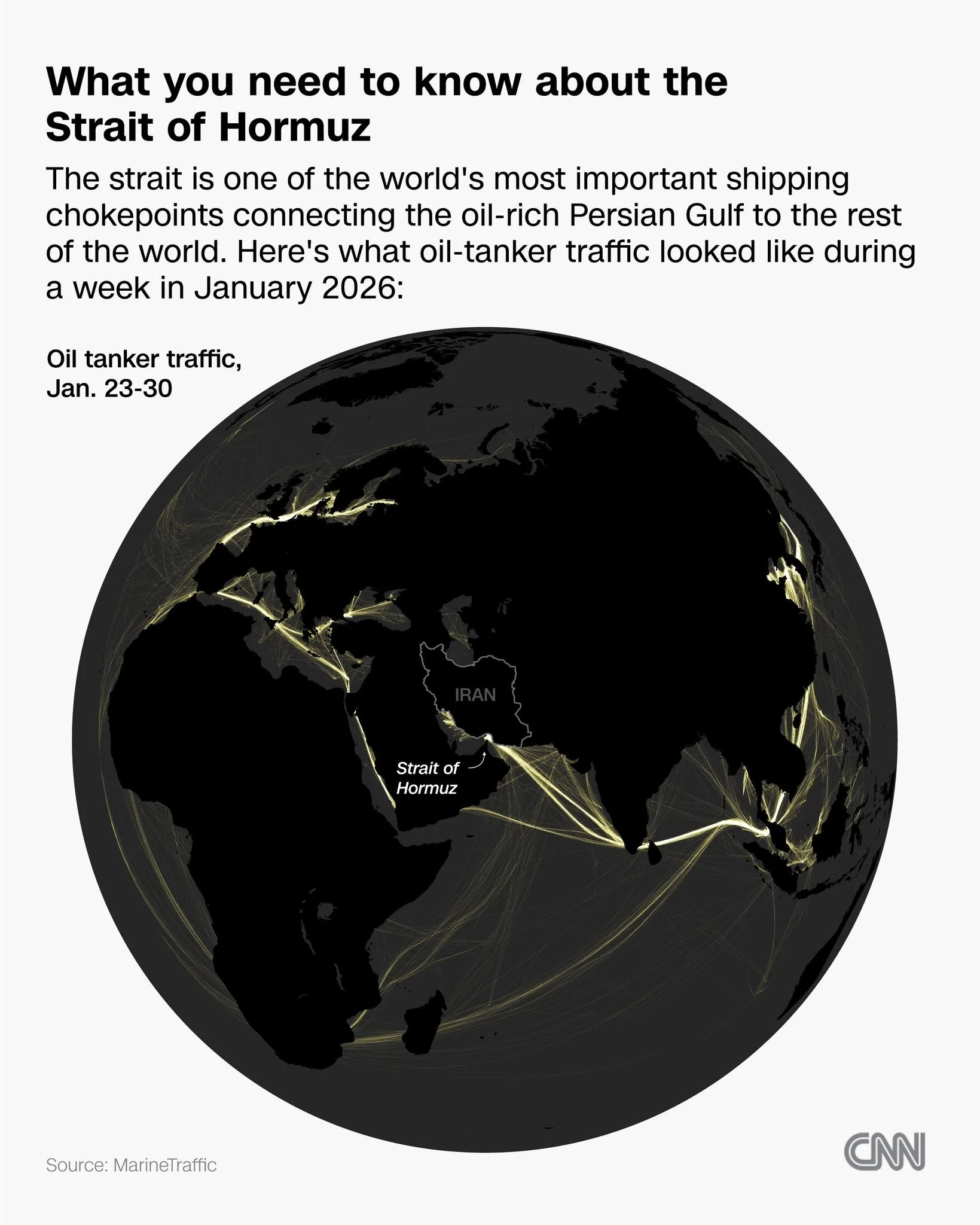
Image Credit: MarineTraffic - CNN International
Strategic Assessment
Thailand’s 61-day reserve buffer provides operational reassurance against short-term disruption. The decisive variable is duration.
If oil prices stabilise after initial volatility, Thailand’s macroeconomic impact will likely be manageable.
If prices remain structurally elevated, the pressure shifts toward inflation management, fiscal flexibility and export competitiveness.
The US–Iran conflict does not create an immediate crisis for Thailand. It tests resilience.
Investors should monitor sustained Brent crude movements in global oil markets, security developments around the Strait of Hormuz, shipping insurance premiums, exchange rate volatility and OPEC production adjustments.
Geopolitical shocks increasingly originate outside Southeast Asia. Their economic effects are transmitted rapidly through energy, finance and trade.
Thailand is insulated from immediate supply interruption. It remains exposed to global pricing power.