
Thailand EV Policy 2026: Oil Shock, Chinese Dominance, and the Road Ahead
Thailand's EV market grew 80% in 2025, crossing 120,000 registrations and 19% market penetration. But an oil shock from the Middle East, structural dependence on Chinese manufacturers, and a grid still 85% fossil-powered are testing whether the government's 30@30 policy can survive contact with political and economic reality.
When Prime Minister Anutin Charnvirakul arrived at Government House on March 25, 2026, he did so in a BYD Sealion 7 (a sleek Chinese-made electric SUV), having left his Rolls-Royce behind. He drove himself. No motorcade. No escort. For three consecutive days.
It was a carefully staged signal. Thailand was in the grip of its worst fuel crisis in years, with oil prices surging toward $100 per barrel following escalating Middle East tensions and disruptions to Red Sea and Strait of Hormuz shipping routes. Fuel prices had spiked 6 baht per litre overnight. Petrol stations were running dry. Panic buying had pushed daily national fuel consumption from 67 million litres to over 80 million litres.
The Prime Minister's BYD was a message to three audiences at once: to Thai consumers, that EVs are the answer to energy vulnerability; to investors, that the government's 30@30 commitment is personal, not just bureaucratic; and to the world, that Thailand is serious about its electric future.
But the gesture also revealed something the government did not intend to show.
A 1.3 million baht electric SUV as a symbol of crisis leadership exposed a fault line that will define Thailand's EV trajectory for years to come: the gap between industrial ambition and social reality.
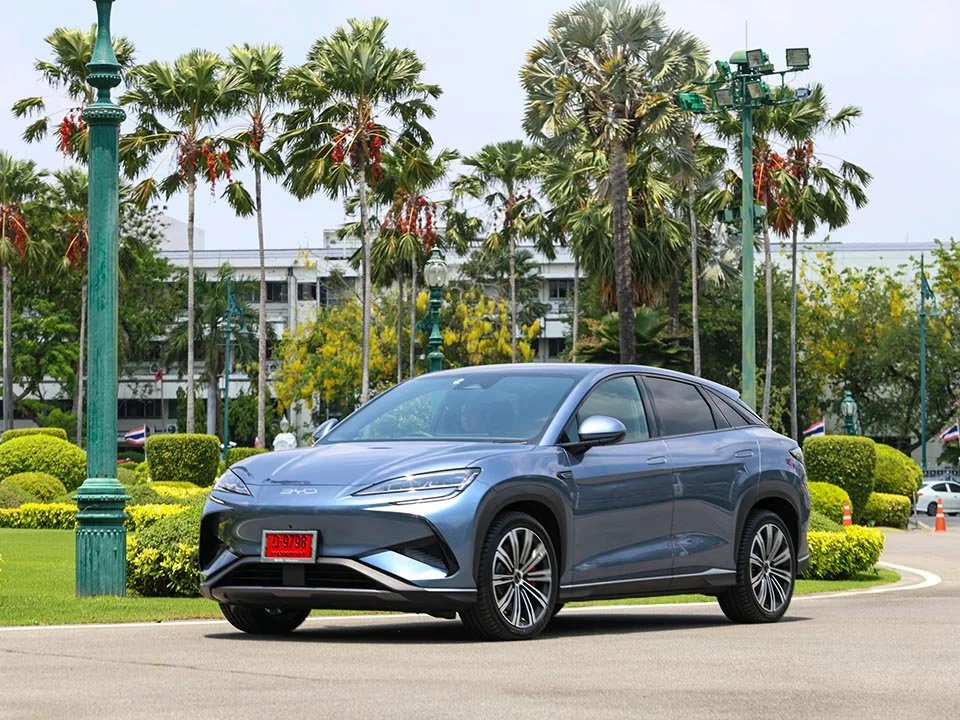
Source: Pattayamail.com
Thailand EV Market 2025: The Numbers Behind the Momentum
Before examining the complications, the underlying data demands acknowledgement. Thailand's EV transition is not rhetoric. It is accelerating fast.
BEV registrations surged 80% in 2025, reaching 120,301 units and pushing market penetration to 19.4%, extraordinary growth for a market that was near-zero just three years ago.
Over 137 billion baht in EV supply chain investment has been committed by manufacturers under the EV3 and EV3.5 incentive schemes. BYD's Rayong factory is now producing vehicles locally. Domestic EV manufacturing surged 1,974% year-on-year in late 2025. The government has spent over 12 billion baht subsidising 175,000 battery-electric vehicles.
Three successive prime ministers (Srettha, Paetongtarn, and now Anutin) from different political parties have maintained the 30@30 policy without deviation. In a country known for political turbulence, this is remarkable continuity. BOI Secretary General Narit Therdsteerasukdi has been the technocratic constant throughout, ensuring policy coherence regardless of who sat in the PM's chair.
By any measure, Thailand's EV story is real.
How the Oil Shock Is Reshaping Thailand's EV Transition
The escalating Middle East conflict, encompassing the US-Iran standoff, Red Sea shipping disruptions, and the resulting oil price volatility, has created a dual effect on Thailand's EV narrative that defies simple analysis.
On one hand, the energy shock has done more to mainstream EV awareness than any government campaign could have achieved.
When petrol prices jump 6 baht per litre overnight and queues form at petrol stations, the arithmetic of EV ownership becomes viscerally clear to ordinary consumers. Running an EV costs approximately 0.58 baht per kilometre versus 3.42 baht per kilometre for a comparable petrol SUV, a sixfold difference that is suddenly, painfully visible. EV inquiry volumes spiked across dealerships. Even MG Thailand's VP acknowledged the oil shock "could lift demand for EVs to some extent."
On the other hand, the same energy crisis that makes EVs appealing is suppressing the purchasing power needed to buy them.
Thailand imports approximately 43% of its energy. When oil prices surge, the inflationary spillover affects every sector, from food transport to manufacturing inputs. The households most exposed to fuel price volatility are the same households who cannot afford a 1.2 million baht entry-level EV. Deputy Finance Minister Paopoom Rojanasakul articulated the core fear clearly: "The worst outcome would be if Thais become major consumers of EVs, but we are not producers. This situation must not happen." The Middle East crisis has made both the urgency and the inequity of Thailand's energy transition more visible simultaneously.
There is also a deeper irony that investors must understand. Thailand's electricity grid is approximately 85% fossil-based, one of the highest ratios in Southeast Asia.
A lifecycle assessment published in 2024 found that EVs running on Thailand's current electricity mix reduce environmental costs by only 14%. The TDRI put it plainly in December 2025: Thailand generates only 15% clean electricity, far below the regional average and far behind Vietnam's 38%. The Middle East conflict's disruption of global oil markets creates urgency for the EV transition, but until Thailand decarbonises its grid, EVs are shifting fossil dependency rather than eliminating it.
Thailand's EV Policy Framework: Strengths and Structural Risks
Thailand's EV policy framework is sophisticated, but it contains structural vulnerabilities that the current crisis is bringing into sharp relief.
The government's EV incentive schemes, EV3 (2022–2023) and EV3.5 (2024–2027), successfully drove adoption but disproportionately benefited the premium end of the market and, crucially, disproportionately benefited Chinese manufacturers.
ISEAS researcher Archanun Kohpaiboon calculated that ACFTA tariff-free treatment for Chinese EVs, combined with EV3 subsidies, gave Chinese vehicles a price advantage of between 7.2% and 50.1% over Japanese and Korean competitors. Japanese EVs still face 20% import tariffs. Korean EVs face 40%. This is not a level playing field; it is a policy that has structurally accelerated Chinese EV dominance in Thailand.
The consequences are now visible.
Chinese brands hold over 70% of Thailand's BEV market. Japanese manufacturers are voting with their feet: Subaru closed its Bangkok plant, Suzuki announced closure of its Rayong facility, Honda halved production capacity, and Nissan shuttered one of its two Thai factories. Total vehicle production fell roughly 20% in 2024 to approximately 1.5 million units, with 18 consecutive months of production decline through early 2025. The Federation of Thai Industries estimates that over 100,000 auto workers face redundancy between 2025 and 2026.
Toyota's response has been diplomatically sophisticated. Chairman Akio Toyoda met Prime Minister Paetongtarn personally in December 2024 and pledged 55 billion baht to retool Thai production lines for hybrids.
This is not a new warning. As Reuters reported in 2020, Thailand's auto parts sector was already forecasting 100,000 job losses as the EV shift took hold. Five years later, that forecast remains unresolved.
The government responded by approving new hybrid vehicle tax incentives (excise rates of 6–9% for HEVs, effective 2026–2032), a significant policy pivot that tacitly acknowledges the BEV-only approach had created unsustainable pressures on the traditional auto ecosystem. This technology-neutral shift matters: it signals that the government is managing the transition, not just mandating it.
The Neta collapse has added a consumer trust dimension that policymakers cannot ignore. The Chinese brand's implosion (from 12% EV market share in 2023 to bankruptcy proceedings in 2025, leaving over 220 Thai consumers with broken vehicles and no after-sales support) has made "Chinese EV reliability" a live public anxiety.
The collapse also exposed a structural flaw in the incentive architecture: Neta was unable to meet its local production obligations, and the government ultimately withheld subsidy payments, illustrating the enforcement risk that applies to the entire compensatory production framework.
Even BYD, dominant with nearly half of BEV sales, has faced backlash over aggressive post-sale discounting that penalised early adopters, as well as global recalls affecting over 115,000 vehicles.
The Ipsos 2025 survey found 60% of Thai drivers cite range and battery anxiety as their top EV concern, while the Deloitte 2025 Global Automotive Consumer Study found ICE preference in Thailand actually rose from 32% to 36% between 2024 and 2025. Consumer confidence is fragile precisely when the government needs it to be robust.
The Anutin BYD Moment: Political Signal or Inequality Exposed?
Prime Minister Anutin's three-day BYD commute was not accidental. Understanding its deeper implications is essential for anyone navigating the Thai policy environment.
Positively, it did three things.
First, it merged the PM's personal brand with the EV agenda at the precise moment when the Middle East crisis gave EVs their strongest-ever mainstream relevance.
Second, it sent an unambiguous signal to the EV supply chain, particularly BYD, whose Rayong factory is a cornerstone of Thailand's 30@30 ambition, that the government's welcome remains warm even as global scrutiny of Chinese supply chain dependency intensifies.
Third, it reframed EVs as an energy security instrument rather than a luxury lifestyle product, which is the correct strategic framing for a country with 43% energy import dependency.
But the backlash revealed something equally important. MP Dachai Ekpathaphi's parliamentary challenge, "the rich can buy them, but ordinary people still use pickup trucks and diesel to make a living," captured a structural truth that the gesture unintentionally exposed.
The Bangkok Post editorial board was sharper still: "True leadership in a crisis is not defined by the electric vehicle the prime minister drives, but by the tangible options he creates for those who cannot afford to switch gears."
For investors and business executives, the political implication is this: the Anutin BYD episode confirms that Thailand's EV commitment is genuine at the leadership level, but it also reveals that the political infrastructure to sustain public support for the transition (affordable entry-level EVs, mass-market charging access, meaningful worker transition support) is incomplete.
The next policy battleground is not whether Thailand pursues EVs, but whether it can make the transition inclusive enough to maintain the bipartisan consensus that has sustained it through three prime ministers.
Thailand's EV Geopolitics: Between Chinese Capital and Japanese Legacy
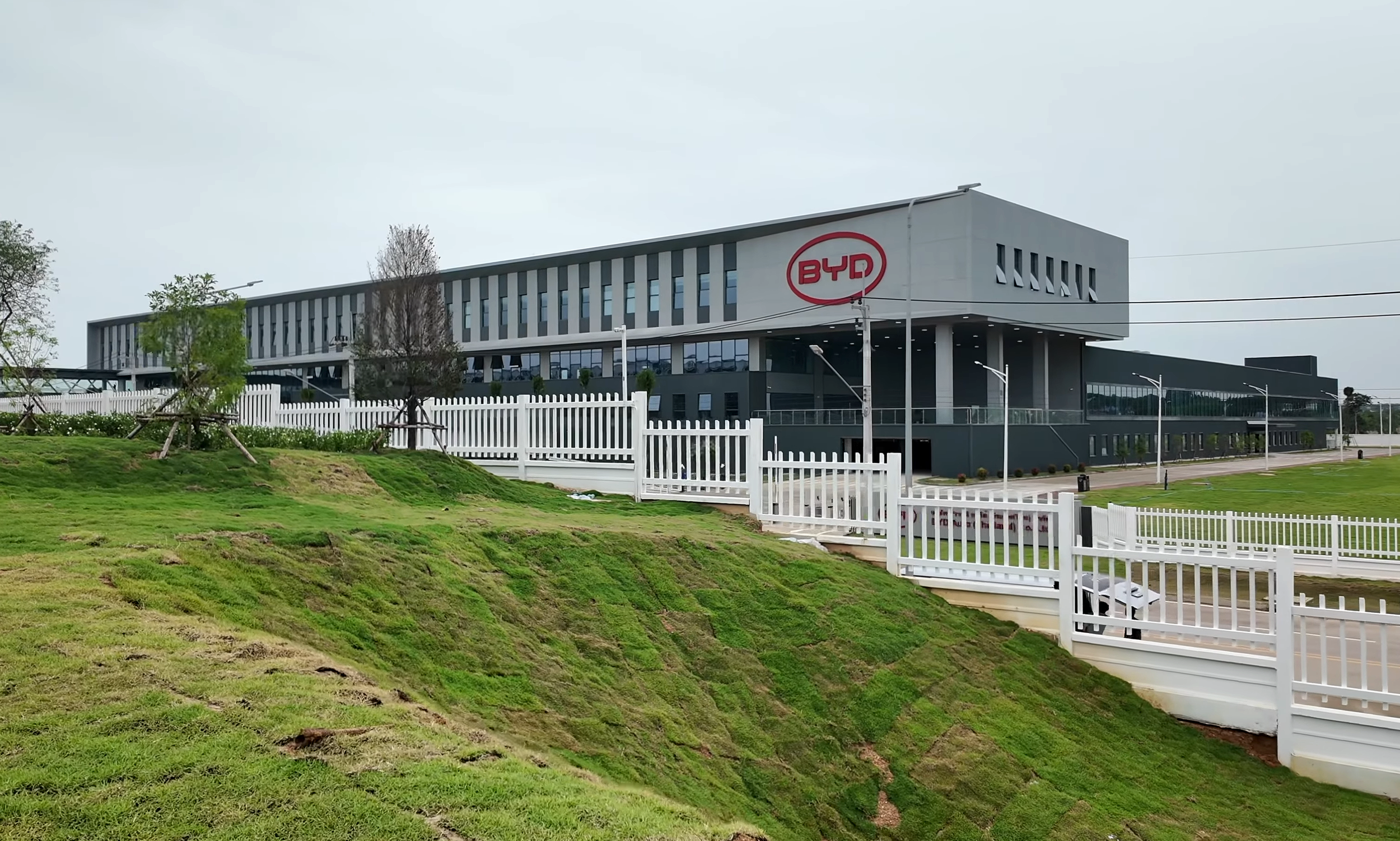
Source: Wikimedia
Thailand's EV story cannot be read without its geopolitical context.
The country is navigating a structural dependency on Chinese EV technology and manufacturing investment, while managing its historical automotive relationships with Japanese manufacturers, who remain dominant in the broader vehicle market, and its ASEAN neighbours, who are increasingly competitive.
The question that ISEAS, TDRI, and Thammasat University researchers are all beginning to ask, cautiously but clearly, is whether Thailand's aggressive embrace of Chinese EV investment has crossed from strategic partnership into structural dependency. Pavida Pananond Professor of International Business and Global Strategy at Thammasat University noted: "You can see that Thailand goes all out in pursuing the Chinese investor."
The absence of effective local content requirements means that Thailand risks becoming an assembly platform for Chinese-designed and Chinese-componented vehicles, rather than a genuine EV manufacturing hub.
Vietnam is watching.
Vietnam's VinFast model, a national champion EV brand with genuine domestic design and manufacturing depth, represents a different strategic bet. Thailand's EV policy, by contrast, has bet on attracting foreign manufacturers while hoping that local supply chain upgrading will follow. Whether that bet pays off depends on enforcement mechanisms that do not yet fully exist.
The Middle East dimension adds a further strategic layer.
Several of the Gulf sovereign wealth funds and energy majors, including entities in the UAE and Saudi Arabia, are actively diversifying into EV and clean energy investments as part of their own economic transformation strategies. Thailand's ASEAN-Middle East corridor positioning, combined with its EV ambitions, creates a distinctive opportunity for Gulf capital to anchor clean energy and EV supply chain investments in Southeast Asia.
This is an underexplored opportunity that Thai policymakers and investment promotion authorities should be actively developing.
Thailand EV Policy Roadmap: Six Priorities for 2026–2027
Thailand is genuinely at a crossroads. The momentum is real, the industrial logic is sound, but the policy architecture requires urgent refinement. From a government relations perspective, six priorities stand out.
1. Redesign EV subsidies around affordability
The EV3.5 scheme has successfully driven adoption of 1+ million baht vehicles. An "EV 4.0" incentive package must target sub-800,000 baht entry-level models to broaden the market base and defuse the inequality narrative that the Anutin BYD episode crystallised. Without this, the EV transition risks becoming politically unsustainable.
2. Enforce local content requirements, or explicitly renegotiate them
If Chinese manufacturers are to enjoy both ACFTA tariff benefits and government subsidies, meaningful local content thresholds must be enforced. Otherwise, the 30@30 target becomes an import target rather than a manufacturing target, undermining the entire industrial strategy rationale.
3. Clean the grid in parallel with the EV push
Thailand cannot credibly market itself as a clean mobility hub while generating 85% of its electricity from fossil fuels. A parallel renewable energy acceleration programme, covering solar, wind, and storage, is not a nice-to-have; it is the precondition for making the EV transition environmentally and commercially coherent.
4. Create a structured automotive workforce transition fund
The Krungthai COMPASS report forecasting 100,000+ redundancies is not a statistic; it is a political time bomb. A well-designed fund, modelled on Germany's short-time work scheme or Malaysia's JaminKerja programme, is necessary to maintain the labour movement's tacit acceptance of the EV transition agenda.
5. Mandate after-sales and service infrastructure standards
The Neta collapse must become a regulatory turning point. No brand, Chinese, Japanese, or otherwise, should receive import approvals or incentive eligibility without demonstrating minimum service network depth, parts availability commitments, and consumer protection provisions. Consumer trust is the soft infrastructure the entire EV market runs on.
6. Position Thailand as ASEAN's neutral EV hub, not China's Southeast Asian assembly line
Rather than defaulting to Chinese supply chain dependency, Thailand should leverage its unique position: established auto manufacturing infrastructure, ASEAN centrality, FTA network, and government credibility. The goal is to attract a multilateral EV supply chain, with battery technology from Korea, EV software from Japan, and manufacturing from China, with Thai value-add in assembly, after-sales, and regional distribution. This is a more defensible long-term industrial position.
Investing in Thailand's EV Transition: Opportunities and Risks
For investors, Thailand's EV landscape offers some of the most compelling structural opportunities in ASEAN, alongside some underappreciated risks.
The opportunities cluster in three areas.
EV battery manufacturing and recycling represents perhaps the most significant gap: Thailand has no domestic battery cell manufacturer, despite being the region's largest auto production hub. BOI incentives including eight-year corporate tax exemptions make this a compelling FDI opportunity.
Charging infrastructure outside Bangkok Metropolitan Region represents the second: 70% of Thailand's 11,622 public chargers are in the capital, leaving a vast rural and highway network underserved and policy-supported for private investment.
And the emerging EV financial services ecosystem (insurance products, resale market infrastructure, EV-specific lending) remains almost entirely undeveloped for a fleet that is now 120,000 vehicles and growing rapidly.
The risks are equally real.
Brand trust in Chinese EV makers is structurally fragile following the Neta collapse and BYD recall episodes; investors in Chinese EV distribution should stress-test for consumer backlash scenarios.
The auto parts sector faces existential disruption, with 2,500 Thai parts makers potentially unviable in an EV-dominant market, though this also creates consolidation and retooling capital opportunities for patient industrial investors.
And the grid decarbonisation challenge is not priced into most EV investment theses: without renewable energy investment, the environmental story that underpins long-term EV demand is incomplete.
The single most important variable to watch is whether the government can launch a credible "EV 4.0" affordability package before the 2027 BOI investment review cycle.
That package will signal whether Thailand is serious about broad-based EV adoption, or whether it is content to build an EV hub that serves the top 15% of consumers while leaving the majority behind.
The Road Ahead for Thailand's EV Future
Prime Minister Anutin's BYD Sealion 7 will be remembered as one of the most photographed vehicles in Thai political history, partly because of the licence plate lottery frenzy it triggered, and partly because of what it revealed about the gap between aspiration and reality in Thailand's EV transition.
The ambition is genuine. The industrial logic is sound. The geopolitical urgency is real. But the policy infrastructure, covering affordable vehicles, clean electricity, protected workers, trusted brands, and enforced standards, must catch up with the political symbolism.
Thailand has the platform to be ASEAN's defining EV economy. The question is whether it will use this moment of crisis to build that platform on a foundation broad enough to carry the whole country, or whether the "Detroit of Asia" will remain a title claimed in boardrooms while the factory floor remains uncertain about its future.
For business executives and investors watching this space, my assessment is clear: the structural opportunity in Thailand's EV transition is among the most significant in the region. But the investments that will generate durable returns are those that solve real problems: affordability, after-sales trust, grid decarbonisation, and workforce transition, rather than those that simply ride the subsidy wave.
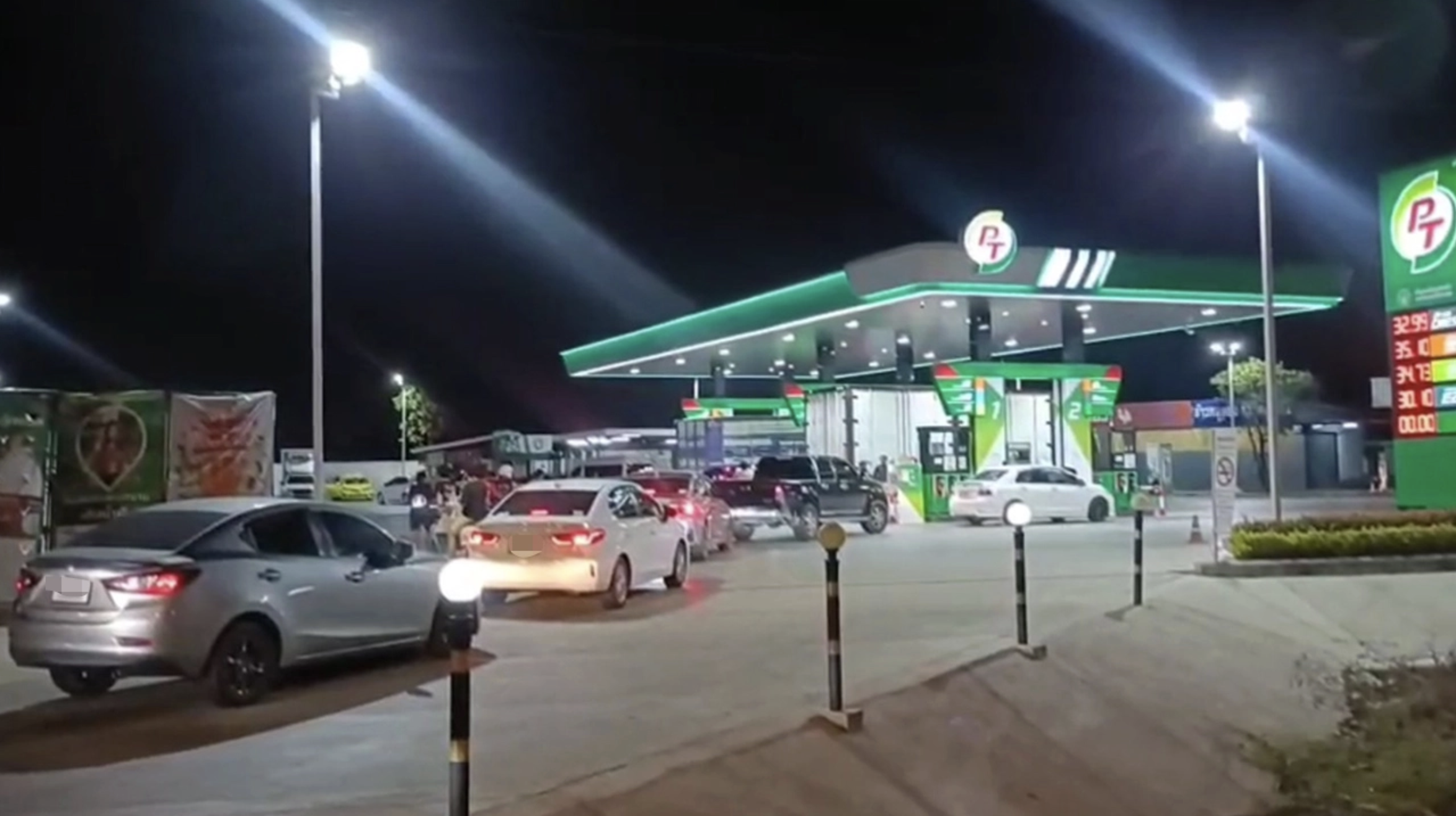
Source: Thairath Online
The oil shock from the Middle East has given Thailand's EV transition its most compelling consumer argument yet. What the government does with that argument in the next 18 months will determine whether this country becomes a genuine EV powerhouse, or a cautionary tale about the gap between policy ambition and policy execution.
Postscript — 2 April 2026
Hours after this analysis was published, Focus Taiwan reported that Taiwanese firms Gogoro and Aionex are actively expanding battery-swapping infrastructure into Thailand and Vietnam, citing the same fuel crisis dynamics examined above. Gogoro CEO Henry Chiang, speaking at The Economist's Sustainability Week Asia in Bangkok last week, pointed to battery-swapping as a solution to the charging infrastructure constraints that continue to limit EV adoption outside major urban centres.
Taiwan's entry into Southeast Asia's EV supply chain is a direct, live illustration of the multilateral hub strategy outlined in Priority 6 of this roadmap. The question for Thai policymakers is whether the regulatory and incentive framework can be adapted quickly enough to welcome non-Chinese entrants on competitive terms, before the window of genuine supply chain diversification closes.
— Gift Tammapibanudom, Partner & Co-Founder
mcg-asia.com | Bangkok
Gift Tammapibanudom is Partner and Co-Founder of Maverick Consulting Group, a government relations, policy advocacy, and strategic communications consultancy operating across Thailand, ASEAN, and the Middle East.
She has experience advising Thailand's automotive industry and EV transition since 2020, when she was quoted by Reuters identifying the sector's inflection point. Views expressed are the author's own.